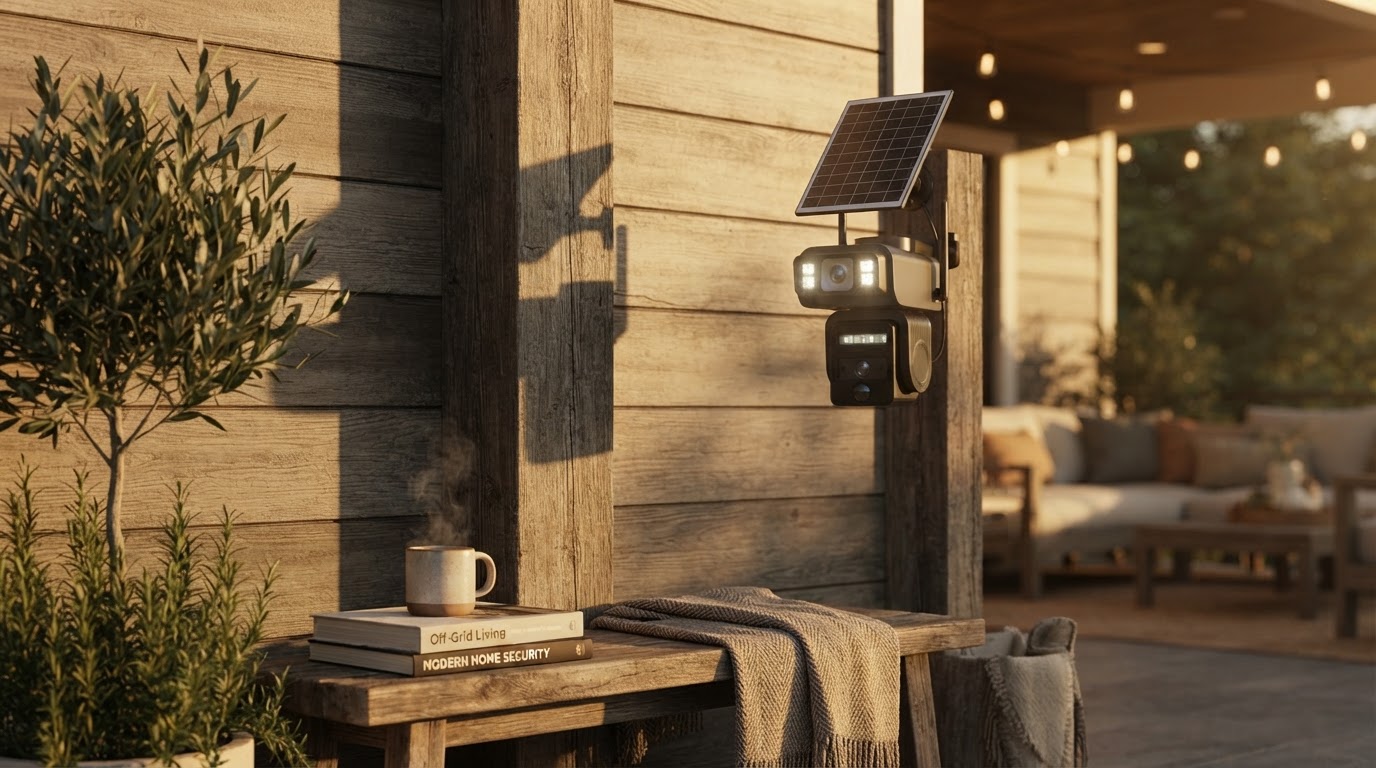
Choosing a Solar Surveillance Camera for Residential Use
 Sam VasquezBuying Guide Lead
September 22, 2026 — The shift toward off-grid property protection has accelerated, positioning the Solar Surveillance Camera as a central component for homeowners seeking to eliminate wiring headaches. As more residents move away from traditional hardwired systems, the demand for high-efficiency photovoltaic charging has reshaped what we expect from outdoor hardware.
Selecting a reliable unit requires looking past marketing buzz to find hardware that actually holds a charge during a week of overcast skies. According to analysis by SafeHome.org, systems like those from ADT and Lorex are leading the market by integrating solar-powered options into comprehensive professional monitoring frameworks. However, for the DIY homeowner, the choice usually comes down to balancing resolution against battery longevity. I have found that while many brands promise infinite power, the actual performance depends heavily on the efficiency of the integrated panel and the software's ability to manage motion-trigger events without draining the cells overnight.
The Property Protection Framework
When evaluating a Solar Surveillance Camera, I focus on three core metrics: resolution, field of view, and storage costs. Between the eufy Solar Powered Security Camera and the Tapo wire-free series, I’ve noticed distinct trade-offs. The eufy models are known for 4K detail and 360-degree coverage, which is excellent if you have a wide driveway or an open backyard. On the other hand, Tapo emphasizes a no-monthly-fee model with AI motion detection, making it a strong contender for those who want a set-it-and-forget-it installation. If you're on a budget, the Tapo options provide the essential wire-free experience without the premium price tag of 4K hardware. However, if you need to identify license plates or fine facial features at a distance, the extra pixels in a eufy system are worth the investment. Skip this if you already have a robust wired floodlight system, as solar units are designed specifically to solve the problem of power access in remote corners of a lot. For most residential setups, a wireless solar camera for home provides the right balance of ease and visibility. I also recommend checking if your wireless outdoor camera with solar panel performance meets your specific local climate needs before committing to a full multi-camera array. If you are managing a larger estate, you might consider scaling remote security with Solar Surveillance Camera to cover perimeter fences where Wi-Fi and power are otherwise unavailable. Here's what I'd actually buy: a high-resolution Solar Surveillance Camera that supports local SD card storage to avoid recurring cloud costs while maintaining 24/7 readiness.
Expert tip: Always mount your solar panel at a 30 to 45-degree angle facing south to maximize solar intake, even if the camera itself is pointing north. This ensures the internal battery remains topped off during the shorter days of winter when wireless outdoor cameras with solar panels face their toughest test.
Ultimately, the best choice depends on your specific layout and how much you value high-definition playback versus simple motion alerts.
Shop Solar Surveillance Camera.
Sources
- Best Solar-Powered Security Cameras of 2026 - SafeHome.org
- Solar Security Cameras | Wire-Free Outdoor Protection - Tapo Store
- Solar Powered Security Cameras - eufy US