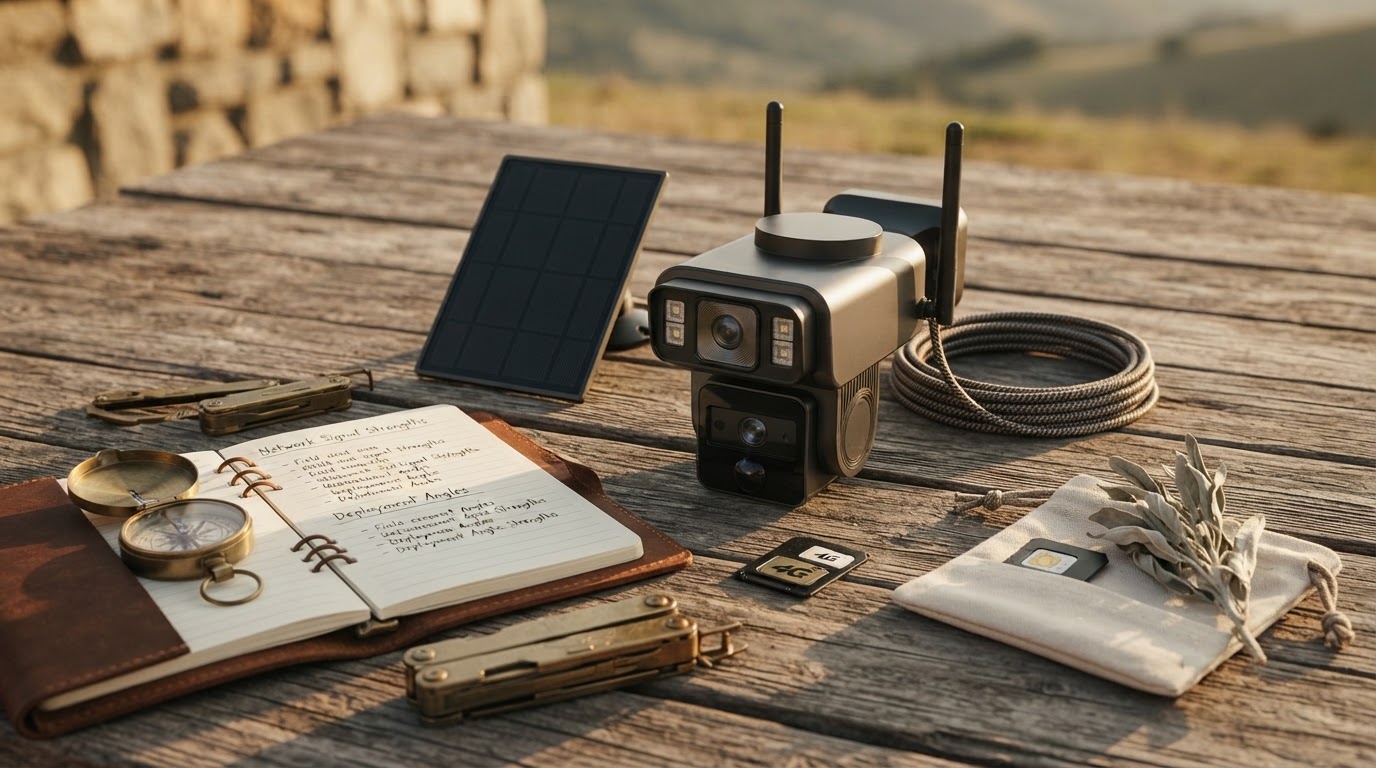
Securing Off-Grid Properties with 4G Solar Surveillance Camera
 Sam VasquezBuying Guide Lead
October 1, 2026. This guide examines the technical requirements and deployment strategies for cellular-connected security systems in environments lacking traditional infrastructure. It is written for property owners and project managers who need reliable visual oversight in locations where Wi-Fi and hardwired power are unavailable.
The Connectivity Gap in Remote Monitoring
Traditional security systems rely heavily on two pillars: a stable AC power source and a local network connection, usually via Wi-Fi or Ethernet. When these are missing, standard consumer cameras become expensive paperweights. For those managing construction sites, rural acreage, or equipment yards, the lack of infrastructure creates a significant vulnerability. According to CCTV Security Pros, specialized 4G LTE systems are now the primary solution for these scenarios, combining cellular modems with high-capacity batteries and solar harvesting to bridge the gap. These systems function by using the same cellular towers that power your smartphone, creating an independent uplink that doesn't depend on a local router. This is particularly vital when you are setting up a solar surveillance camera for remote area where the nearest internet hub might be miles away. Without a dedicated 4G modem, a camera in a field is effectively isolated, unable to send alerts or stream live footage when a motion event occurs. I have seen many property owners attempt to use Wi-Fi extenders over long distances, but these setups frequently fail due to signal degradation and environmental interference. A 4g lte solar surveillance camera bypasses these local bottlenecks entirely by communicating directly with the carrier network.
Technical Integration of Solar and Cellular Hardware
When we look at how a Solar Surveillance Camera functions in the field, the efficiency of the power-to-data ratio is the most critical metric. The hardware must balance the high energy demands of a 4G radio—which consumes significantly more power than a Wi-Fi chip—with the limited daily harvest from a solar panel. Reolink addresses this through their Go series, which utilizes high-efficiency PIR sensors to keep the camera in a low-power sleep state until movement is detected, preserving the battery for data transmission. Similarly, Xega provides 2K HD resolution in their outdoor cellular units, ensuring that the data transmitted over the 4G network is clear enough for identification purposes. If you are deploying a wireless solar camera for remote property, you need to account for the carrier signal strength at the specific mounting height. Between these two, I'd go with the Reolink Go series for general residential or light commercial use because of its consistent software ecosystem, though the Xega is a strong contender for those who need a pre-bundled SIM card experience. If you're on a budget, you might be tempted to look at no-name imports, but in my experience, the cellular modems in those units often lack the necessary bands for North American carriers, leading to frequent disconnects. Reliable remote monitoring requires a solar surveillance camera for remote area that supports multiple LTE bands to ensure a stable handshake with the nearest tower, regardless of whether you are using Verizon, AT&T, or T-Mobile.
Selecting the Right 4G Solar Configuration
Choosing the right hardware involves more than just checking a spec sheet; it requires matching the camera's duty cycle to your specific environment. Here's what I'd actually buy: the SureVision 4G LTE system from CCTV Security Pros if I were securing a high-value construction site or a commercial equipment yard. Their hardware is built for professional-grade endurance and offers more robust mounting options than consumer-level kits. Skip this if you only need to check in on a vacation home once a week—a standard Reolink unit will save you hundreds of dollars in that scenario. When evaluating your options for a wireless solar camera for remote property, use the following framework to ensure the hardware meets the demand:
- Carrier Compatibility: Verify the camera supports the specific LTE bands (such as B2, B4, B12) used by your local provider.
- Solar Wattage: Ensure the included panel is rated for at least 3.5W to 6W to keep the battery topped off during winter months.
- Data Plan Flexibility: Look for cameras that allow you to use your own SIM card rather than locking you into a proprietary, expensive monthly subscription.
- Storage Redundancy: Prioritize units that offer both local microSD recording and encrypted cloud backup to ensure footage exists even if the camera is stolen.
- Weather Rating: A minimum of IP65 is required, but IP66 is preferred for areas prone to heavy rain or wind-blown dust.
Shop Solar Surveillance Camera here
Sources
- Wireless Security Cameras | 4G LTE & Solar Cameras - CCTV Security Pros
- Xega 4G LTE Cellular Security Cameras Wireless Outdoor Solar ...
- Best Cellular Security Camera | 4G LTE CCTV Solutions - Reolink US