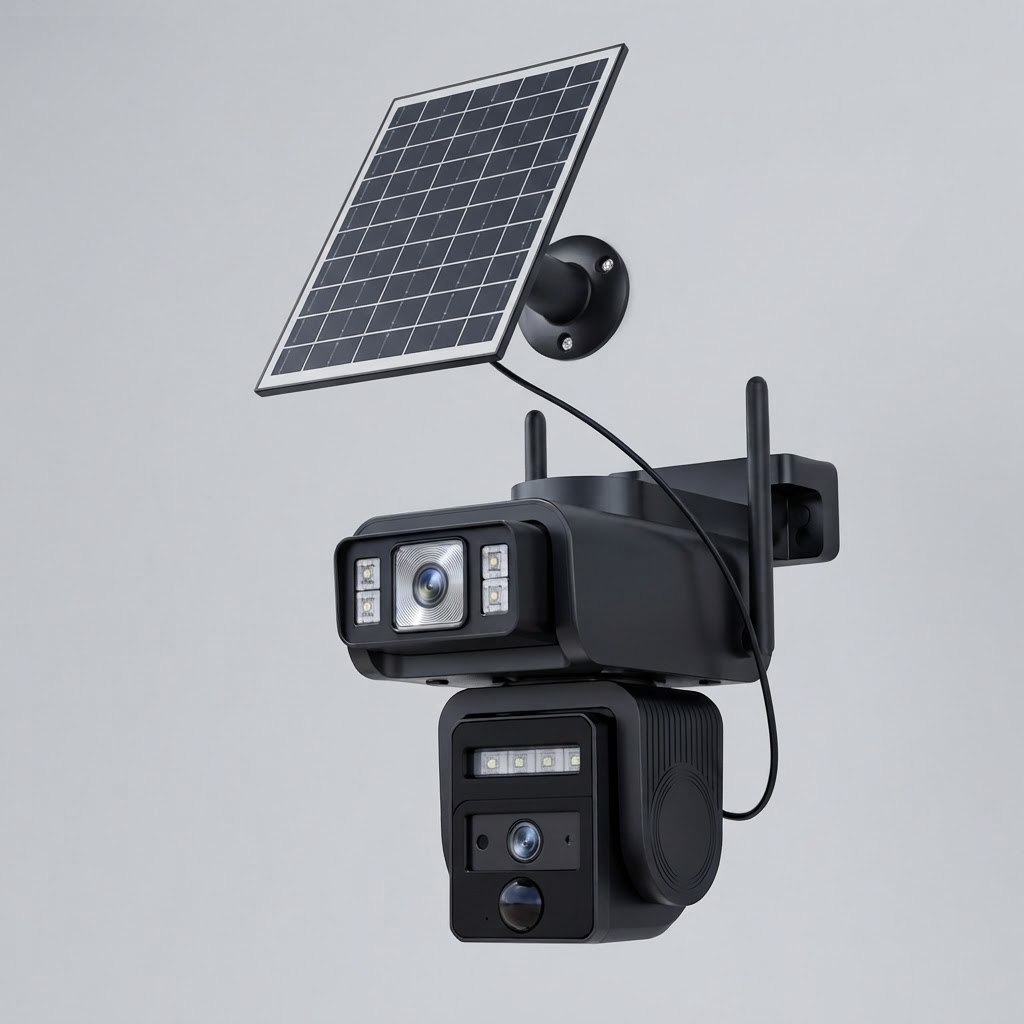
How Do Solar Powered Security Cameras Work: The Complete Guide
Solar powered security cameras offer a completely wire-free solution for modern home monitoring. Understanding how these systems harvest sunlight, manage battery power, and deliver real-time surveillance helps homeowners maximize their property defense without running electrical conduit or complex network cables.
How Solar Security Cameras Harvest and Store Power
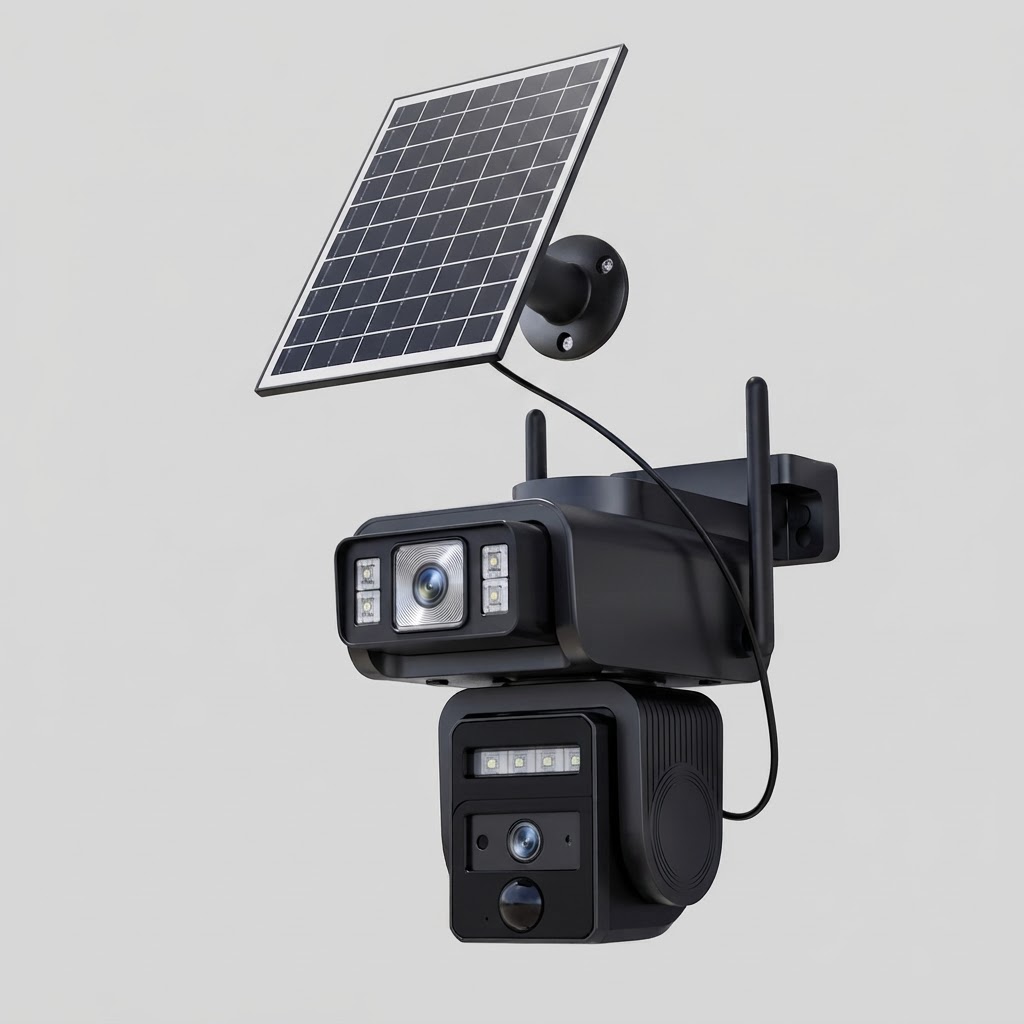
At the core of a solar surveillance system is the relationship between high conversion rate solar panels and rechargeable battery technology. During daylight hours, the solar panel converts sunlight into direct current electricity, constantly replenishing an integrated internal battery.
In high-performance units such as the Seckun Solar CCTV Security Camera, an 8000mAh rechargeable battery acts as the core power reservoir. This high-capacity battery stores sufficient energy to operate the device continuously through nighttime hours, rainy days, and overcast weather. Before initial deployment, charging the internal battery via a standard 5V/2A phone charger for approximately 10 hours ensures the cells reach optimal baseline capacity.
Wireless Connectivity and Network Requirements
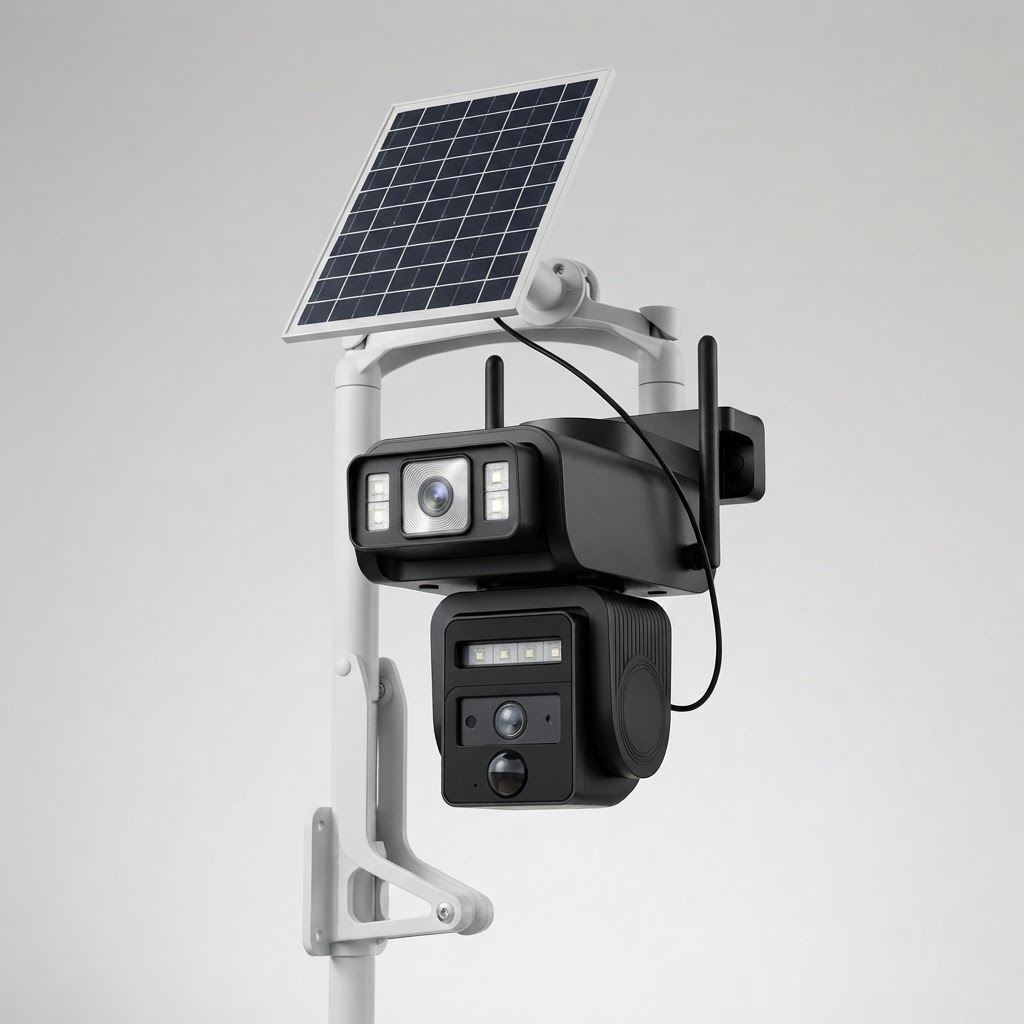
To transmit live video feeds, trigger push notifications, and enable remote access, outdoor solar cameras utilize wireless network modules. Because these cameras rely on long-range stability, they operate exclusively on 2.4GHz WiFi frequencies rather than 5GHz networks. The 2.4GHz spectrum provides superior penetration through exterior walls, brick, and siding, maintaining a stable signal over greater distances. Users connect to the camera using mobile software such as the icam365 app, allowing multi-user access across multiple smartphones.
Camera Optics, Pan-Tilt Control, and Night Vision Modes
Modern solar cameras provide expansive visual coverage through physical rotation and advanced image sensors. Delivering 1080p HD ultra-clear resolution, the optical system captures detailed video feeds. Motorized pan and tilt controls grant 355° horizontal rotation and 120° vertical rotation, effectively eliminating blind spots around driveways, yards, and entryways.
For low-light operation, modern cameras incorporate twin illumination methods:
- Infrared Night Vision: Integrated infrared light sensors automatically activate in pitch-black conditions, streaming crisp black-and-white video.
- Full-Color Night Vision: Dual white-light spotlights illuminate the area upon detecting motion, delivering vivid full-color night video while visually deterring trespassers.
AI Motion Detection and Smart Threat Detection
To preserve battery power and prevent unnecessary notification fatigue, modern cameras utilize Passive Infrared (PIR) sensors coupled with smart AI motion analysis. Standard motion detection triggers on any movement, including swaying branches or rain. In contrast, advanced PIR sensors measure thermal radiation to detect actual physical bodies.
Once motion triggers the thermal sensor, onboard AI algorithms analyze the target to recognize specific entities: persons, vehicles, pets, and packages. Upon identification, the camera instantly transmits real-time alerts to your mobile phone while activating integrated defense mechanisms like two-way audio, siren alarms, or flashing white lights.
Local Storage vs Cloud Backup Options
Video recording options must balance security, accessibility, and cost. Solar cameras typically support dual storage paths:
Installation Considerations for Optimal Performance
With an IP66 waterproof rating, outdoor cameras are built to withstand heavy rain, snow, and extreme weather. Proper installation involves mounting the camera bracket in an elevated location and positioning the modular solar panel in direct sunlight. Because no network cables or power lines are required, installation simply involves anchoring the bracket with included mounting screws, turning the internal power switch on inside the sealed port cover, and pairing via QR code.
Related in this cluster
- How Solar Panel Security Cameras Work Completely Off-Grid
- How to Install a Solar Security Camera with the icam365 App
- Solar Security Cameras vs. Traditional Wired Cameras
- How Smart AI Motion Detection Eliminates False Camera Alerts
- Seckun Solar CCTV Camera Review: Spotlight & 360° Protection
- Solar Security Camera FAQ: Battery, Storage, and WiFi Answered