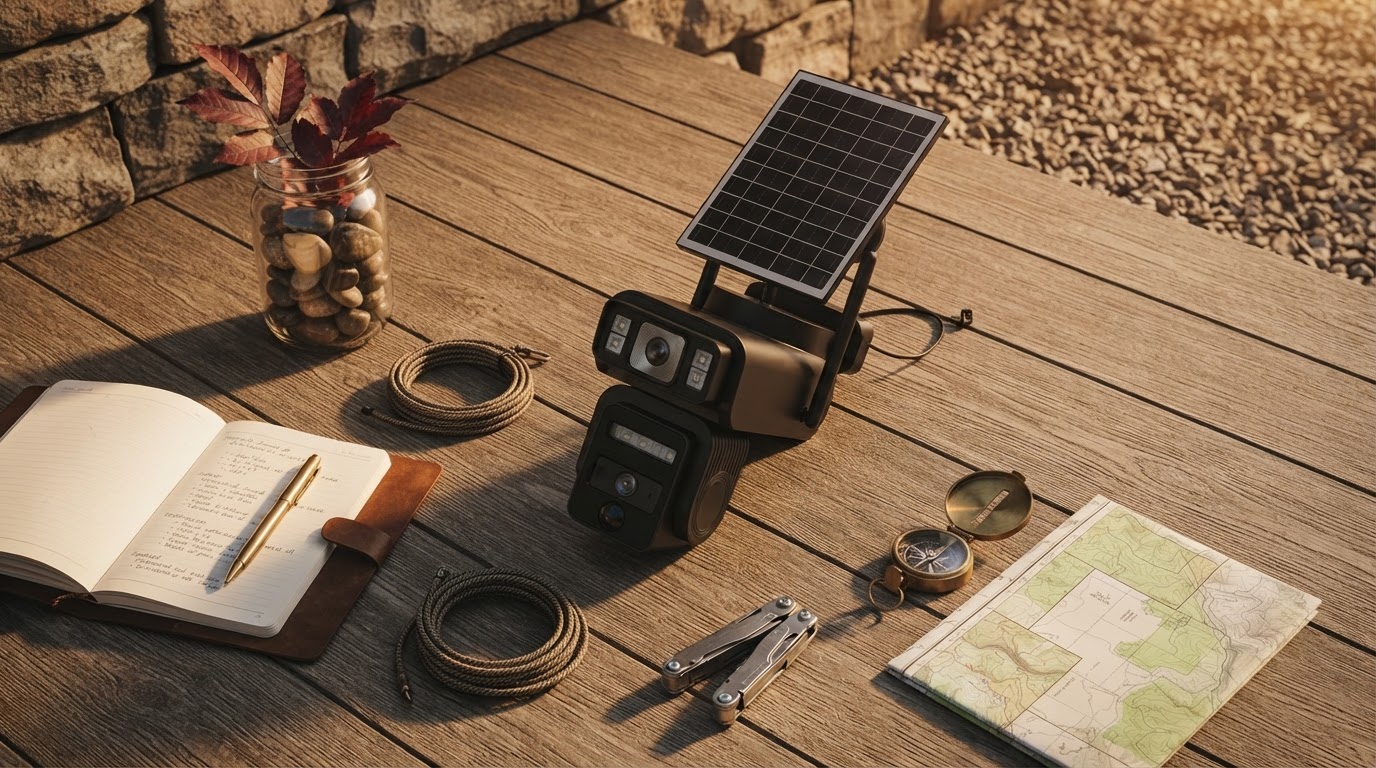
Optimizing Safety with Solar Surveillance Camera Floodlights
 Priya RamanSenior Analyst
October 17, 2026. This analysis examines the technical requirements and deployment strategies for integrated solar-powered floodlight systems. It is designed for property owners seeking to bridge the gap between motion-activated lighting and continuous digital monitoring in off-grid or hard-to-wire locations.
To evaluate these systems effectively, think of it as a matrix of illumination intensity versus energy autonomy. When selecting a solar surveillance camera with integrated lighting, two axes matter here: the physical placement for solar gain and the software-defined triggers for light activation. Without balancing these two dimensions, a system either fails to capture clear footage at night or exhausts its battery before dawn. This framework ensures that the hardware serves its primary purpose—deterrence—without compromising the reliability of the recording.
The Challenge of Nighttime Perimeter Security
Traditional outdoor lighting often operates independently of security recording, leading to overexposed video or late activation that misses critical events. In remote areas of a property, running electrical conduit for high-wattage floodlights is cost-prohibitive, yet low-power infrared LEDs often fail to provide the color detail necessary for identification. According to eufy US, a solar-powered floodlight camera effectively combines these functions, using stored solar energy to power both the high-intensity lamps and the surveillance hardware. This convergence addresses the "blind spot" of traditional solar powered security camera setups where infrared range is limited.
The energy budget of these devices is the most significant constraint. A [wireless outdoor camera solar](/blog/wireless-outdoor-camera-solar) unit must capture video, maintain a Wi-Fi connection, and power high-lumen LEDs from a single battery source charged by the sun. If the floodlight is too bright or stays on too long, the camera may shut down during extended periods of overcast weather. Conversely, if the light is too dim, the sensor cannot utilize its full resolution, rendering the footage less useful for forensic purposes. Once you see it this way, the necessity of high-efficiency solar panels and intelligent power management becomes clear.
Technical Integration of Illumination and Capture
Modern solar surveillance camera systems utilize advanced hardware to manage these competing energy demands. For example, the Tapo C615F Kit offers a 2K resolution sensor paired with a flexible installation model. Users can combine the camera and solar panel into a single unit or use 13-foot cables to place the panel in direct sunlight while the camera remains under an eave. This physical flexibility is critical for maintaining a [best solar powered outdoor cameras](/blog/best-solar-powered-outdoor-cameras) ranking, as it allows for optimal energy harvesting regardless of where the light needs to be cast.
Lighting quality is also evolving. The Reolink Solar Floodlight Cam utilizes dual illumination modes, offering both infrared vision for stealth and bright floodlights for active deterrence. This dual-path approach allows the system to remain in a low-power state until significant motion is detected. At that point, the floodlights engage, switching the camera from black-and-white to color night vision. This transition is vital for capturing identifying features like clothing color or vehicle hues that are lost in standard night vision. These systems are often deployed as part of a broader solar powered security camera network to ensure that every angle of a property is covered by both sight and light.
Strategic Selection and Decision Framework
The decision rule for choosing a floodlight combo depends on your specific environment: prioritize lumen count for high-traffic entryways and battery capacity for remote perimeters. When comparing a standard wireless outdoor camera solar to a floodlight-equipped model, you must account for the increased surface area required for the solar panel to keep up with the lighting demands. A larger panel or a higher conversion efficiency rate is non-negotiable for units that will trigger frequently throughout the night.
To ensure long-term reliability, use the following checklist when evaluating your deployment:
- Verify the solar panel wattage meets or exceeds the daily draw of both the camera and the light.
- Look for adjustable motion zones to prevent the floodlight from triggering on street traffic or swaying trees.
- Ensure the camera supports color night vision when the floodlights are active.
- Check for "all-in-one" versus "split" mounting options to maximize sun exposure via extension cables.
- Confirm the presence of a high-capacity lithium-ion battery capable of sustaining operations through three days of low sunlight.
- Prioritize units with at least 2K resolution to make the most of the additional light provided.
Investing in the right hardware ensures your property remains protected regardless of proximity to the power grid. Shop Solar Surveillance Camera here.
Sources
- 2K Floodlight Solar 360° Pan/Tilt Security Camera, Tapo C615F Kit
- Solar Floodlight Camera: The Ultimate Guide for 2026 - eufy US
- Reolink Solar Floodlight Cam