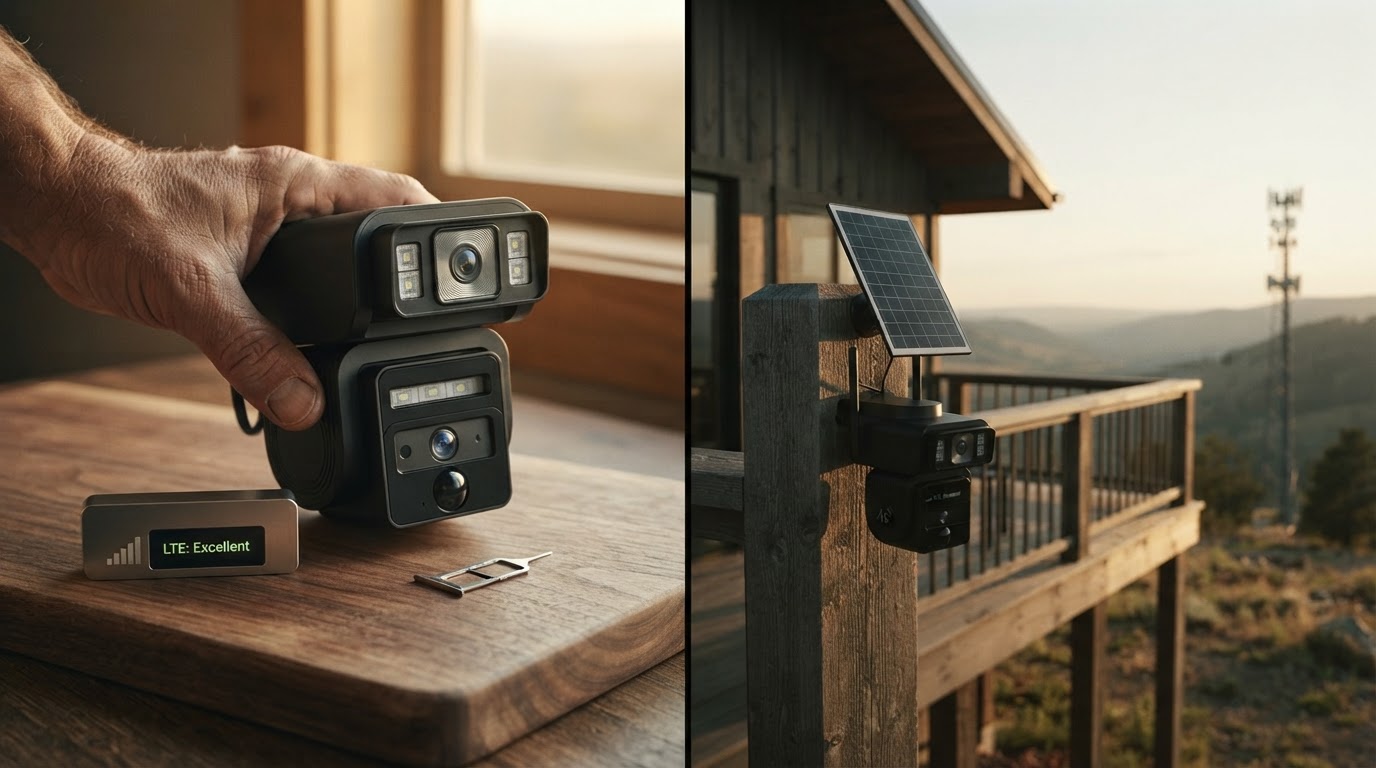
4G LTE Solar Surveillance Camera Connectivity Analysis
 Maya ChenContributing Editor
October 3, 2026—The rapid expansion of cellular infrastructure has fundamentally altered the deployment strategy for Solar Surveillance Camera systems in areas where traditional Wi-Fi is physically impossible to maintain. While most installers prioritize resolution, the shift toward integrated LTE modules represents the most significant change in off-grid reliability since the introduction of high-efficiency silicon cells.
The conventional wisdom says that Wi-Fi extenders are a viable bridge for remote security, but this overlooks the inherent latency and power drain of maintaining a signal over distance. Industry leader Reolink US notes that cellular security cameras utilizing 4G LTE are now the standard for protecting cabins, farms, and locations entirely devoid of internet access. This hardware shift moves the point of failure from a local router to a national cellular network, which typically offers higher uptime in extreme weather conditions than residential-grade networking equipment.
The Connectivity Reliability Framework
Transitioning to a 4G LTE Solar Surveillance Camera requires a departure from the "set and forget" mentality of home networking. Here is the part nobody talks about: data management is the primary bottleneck, not solar capacity. A standard 2K HD stream, such as the one featured in Xega 4G outdoor units, requires consistent throughput that can consume gigabytes of data if motion triggers are not precisely calibrated. When deploying a Solar Surveillance Camera For Remote Area, the hardware must balance the power draw of the LTE modem—which remains in a low-power "heartbeat" state—against the available wattage from the solar panel. Run the math: a typical LTE modem draws significantly more current during transmission than a Wi-Fi radio. This necessitates a larger internal battery buffer to prevent the system from cycling off during peak upload periods or consecutive overcast days. For a wireless solar camera for remote property, the integration of a SIM card from carriers like Verizon or AT&T ensures that the 4g lte solar security camera maintains a direct uplink to the cloud, bypassing the need for local storage that could be tampered with. The effectiveness of securing off-grid properties with 4G solar surveillance camera technology ultimately hinges on the signal-to-noise ratio at the mounting site, which is often the most neglected variable in the installation process.
Expert tip: Prioritize hardware that supports multiple LTE bands; a camera locked to a single frequency will suffer from packet loss as local cell towers undergo maintenance or load balancing.
I’ll change my mind when satellite-linked cameras achieve the same power-to-bandwidth efficiency currently offered by cellular modules, but for now, LTE remains the only logical choice for high-uptime remote monitoring.
Shop Solar Surveillance Camera.
Sources
- Wireless Security Cameras | 4G LTE & Solar Cameras - CCTV Security Pros
- Xega 4G LTE Cellular Security Cameras Wireless Outdoor Solar ...
- Best Cellular Security Camera | 4G LTE CCTV Solutions - Reolink US