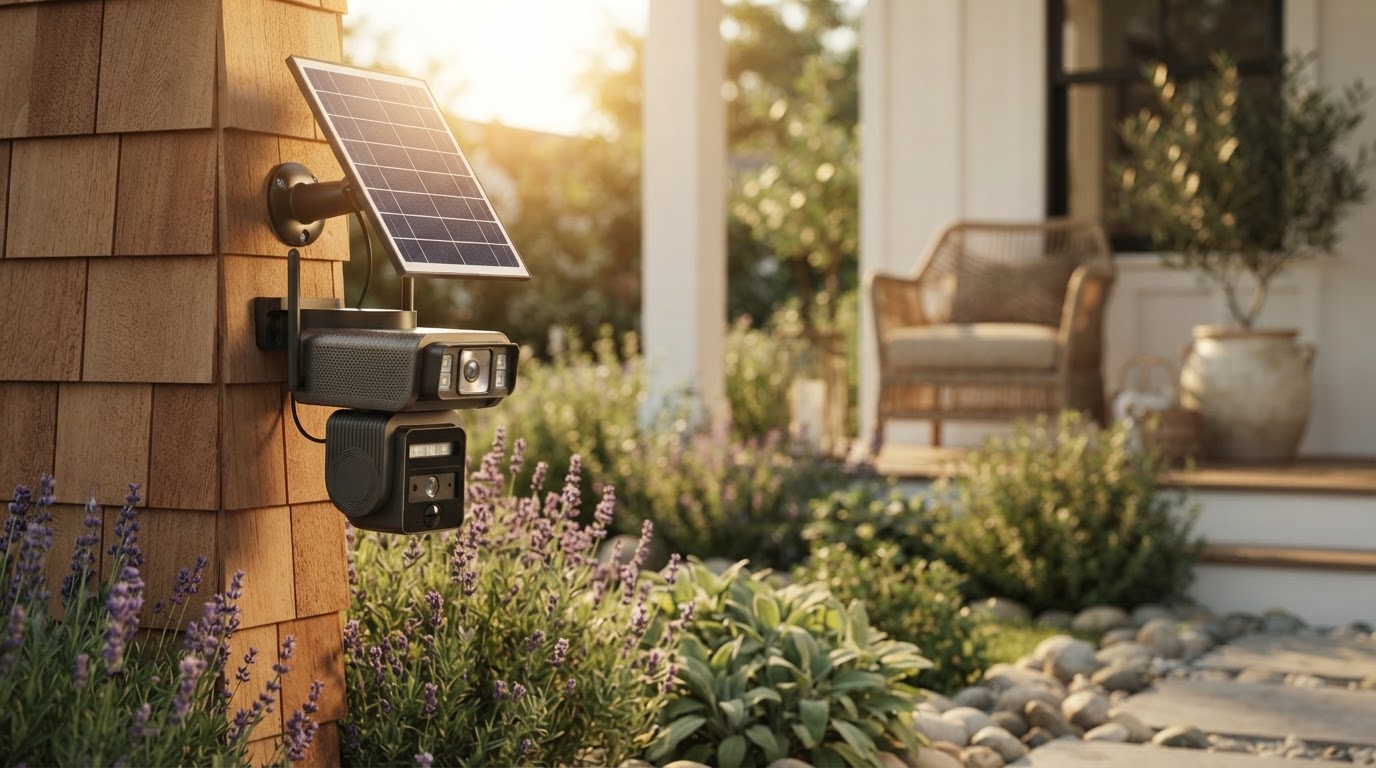
How does a Solar Surveillance Camera maintain power?
 Priya RamanSenior Analyst
September 28, 2026 — A Solar Surveillance Camera maintains continuous operation by balancing real-time photovoltaic generation with high-density battery storage, provided the system receives at least three to four hours of direct sunlight daily.
Property owners evaluating these systems often struggle to reconcile the intermittent nature of sunlight with the requirement for 24/7 security monitoring. This technical tension matters because a power failure during a storm or extended overcast period renders the entire security perimeter vulnerable. Understanding the energy balance requires a framework based on two axes: energy harvest (panel efficiency) and energy expenditure (camera activity levels).
How do weather conditions affect Solar Surveillance Camera performance?
Modern solar cameras utilize high-efficiency monocrystalline panels to capture energy even during overcast conditions, though peak output requires direct solar radiation. The decision rule is simple: the system must generate enough surplus energy during daylight hours to compensate for the 12 to 14 hours of darkness and potential atmospheric interference. According to data from Ctronics, their solar security cameras utilize 10000mAh batteries to bridge the gap between charging cycles, ensuring the device remains active during periods of low light.
Think of it as a matrix of energy density versus consumption. On a clear day, the panel provides enough current to power the camera's internal processors and infrared sensors while simultaneously replenishing the internal lithium-ion cells. During heavy cloud cover, the harvest rate may drop by 50% to 70%, forcing the system to rely more heavily on its stored reserves. This highlights the importance of selecting hardware with significant battery capacity to survive multi-day weather events without losing connectivity or recording capabilities. For users in extremely remote areas, building a DIY solar surveillance camera system for remote use allows for over-provisioning the battery bank to handle these specific environmental stressors.
What are the critical components of a solar power cycle?
The power cycle of a Solar Surveillance Camera relies on the integration of a photovoltaic panel, a charge controller, and a high-capacity rechargeable battery. Once you see it this way, the reliability of the camera becomes a predictable calculation of input versus output rather than a matter of chance. SafeHome.org notes that brands like Arlo integrate these components to deliver 1080p HD image quality consistently by optimizing how the camera draws power during motion-triggered events.
Energy expenditure is the second half of the equation. A [wireless outdoor camera with solar panel](/blog/wireless-outdoor-camera-with-solar-panel) typically operates in a low-power standby mode, only activating high-draw components like Wi-Fi radios and LED spotlights when sensors detect movement. Night Owl Security Products offers 2K resolution systems with integrated spotlights that manage this power draw through intelligent firmware, ensuring the spotlight does not deplete the battery prematurely during high-traffic nights. By utilizing a solar powered security camera, users can eliminate the need for manual recharging, provided the installation site avoids significant shading from trees or structures.
Quick answers
Q: Can a solar camera work at night? A: Yes, solar cameras use internal batteries, such as the 10000mAh units found in Ctronics models, to provide power for infrared LEDs and recording after the sun sets. The battery is recharged the following day by the solar panel.
Q: How much sunlight is required for a full charge? A: Most systems require approximately 3 to 6 hours of direct sunlight to maintain a neutral or positive energy balance. High-traffic areas that trigger frequent recordings may require more exposure or larger panels to prevent battery depletion.
Q: Do these cameras work during a power outage? A: Yes, because they are independent of the electrical grid, a Solar Surveillance Camera will continue to record and store data during a local power failure. If the home Wi-Fi is down, many models will continue to record to an internal SD card until the connection is restored.
Q: Are the batteries replaceable in solar security cameras? A: While many integrated units have sealed batteries to maintain weatherproofing, professional-grade systems often allow for battery replacement after 3 to 5 years of service. Brands like Night Owl focus on weather-resistant housing to protect these internal power cells from moisture.
Learn more about Solar Surveillance Camera at https://solarsurveillancecam.com.
Sources
- Solar Powered Wire Free 2K Camera with Spotlight and 2-Way Audio - Whi
- Best Solar-Powered Security Cameras of 2026 - SafeHome.org
- Solar-Battery Security Cameras - Ctronics