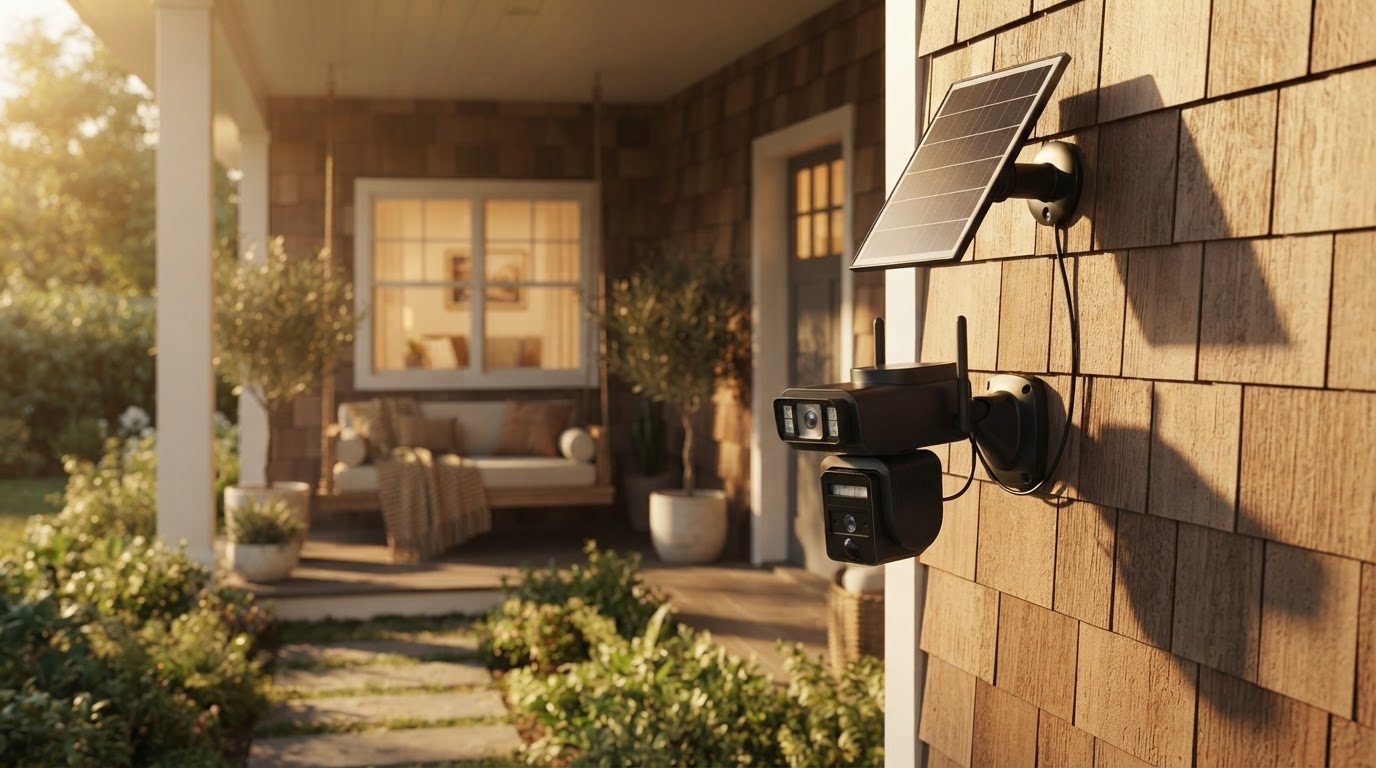
How does a wireless outdoor camera solar system work?
 Sam VasquezBuying Guide Lead
October 21, 2026 — A wireless outdoor camera solar system functions by converting sunlight into electrical energy through integrated or detached photovoltaic panels, storing that power in internal lithium-ion batteries to maintain continuous 2K or 4K video transmission via Wi-Fi.
Property owners typically seek out these systems to avoid the labor-intensive process of trenching power lines or the recurring maintenance of manually charging batteries. Understanding the interplay between solar wattage, battery capacity, and wireless signal strength is essential for ensuring the system remains operational during periods of low light. Reliable performance depends on the efficiency of the charging circuit and the power draw of features like motion-activated spotlights.
Can a solar surveillance camera maintain power during consecutive cloudy days?
Yes, a solar surveillance camera can remain operational during overcast weather provided the internal battery has sufficient capacity and the solar panel is rated for high-efficiency energy conversion even in diffused light. Most modern units, such as those from Night Owl, utilize a built-in solar panel paired with a rechargeable battery specifically designed to provide uninterrupted security during inclement weather. In my experience, the effectiveness of this setup relies heavily on the PIR (Passive Infrared) sensor settings; if the camera triggers too frequently on a gloomy day, the battery drain may exceed the trickle charge provided by the clouds.
If you are on a budget, you might look at the Ctronics 2.5K 5MP series, which uses a 6W solar panel to aggressively harvest energy. Between these two, I’d go with the Ctronics for low-light environments because that 6W rating is significantly higher than the standard 2W or 3W panels found on entry-level models. Data from Ctronics indicates their 100% wireless PTZ cameras are built to handle these fluctuations using high-sensitivity PIR sensors to minimize unnecessary wake-ups. Skip this if you live in a region with less than two hours of indirect sunlight per day, as no battery can overcome a total lack of photon intake indefinitely.
How does wireless connectivity impact the battery life of solar cameras?
Wireless connectivity is the primary driver of power consumption in solar surveillance cameras, as the Wi-Fi radio must periodically wake from a low-power sleep state to transmit data packets or maintain a heartbeat signal with the router. Aosu life notes that their outdoor solar-powered camera designs support 2K and 5MP resolutions, which requires robust wireless throughput to maintain full-color night views without lag. The further the camera is from the access point, the harder the wireless chip works to maintain the connection, which directly depletes the battery faster than the solar panel might be able to replenish it.
Here’s what I’d actually buy: the TP-Link Tapo solar series. They offer AI motion detection that processes data locally on the device, which reduces the amount of data that needs to be transmitted over Wi-Fi, effectively saving power. Tapo's hardware is specifically marketed for "no monthly fees" and "no wires," focusing on efficiency in the wireless handshake. If your Wi-Fi signal is weak at the installation site, I recommend adding a dedicated outdoor extender; otherwise, even the best solar surveillance camera will struggle to stay charged while fighting for a signal.
Quick answers
Q: Does the solar panel need direct sunlight to charge the camera? A: While direct sunlight is optimal for a Solar Surveillance Camera, most units can charge using indirect light or through thin cloud cover, though the charging speed will be reduced by approximately 50% to 70%. Brands like Ctronics provide 6W panels to compensate for these less-than-ideal conditions.
Q: What happens if the solar panel is covered by snow or dust? A: Accumulated debris will stop the photovoltaic process entirely, forcing the camera to rely solely on its internal battery. You should ensure the solar surveillance camera setup factors include a mounting angle of at least 45 degrees to allow for natural runoff of rain and light snow.
Q: Are there solar cameras that include integrated lighting? A: Yes, many models function as a solar floodlight camera combo to provide both security and illumination. For example, Night Owl produces 2K wire-free cameras with built-in spotlights that activate upon motion detection to deter intruders while capturing color footage.
Q: How long do the internal batteries last before they need replacement? A: Most high-quality lithium-ion batteries in these systems are rated for 300 to 500 full charge cycles, which typically equates to three to five years of service life. Choosing the best solar powered outdoor cameras often means selecting brands that use weather-sealed battery compartments to prevent thermal degradation.
Learn more about Solar Surveillance Camera at https://solarsurveillancecam.com.
Sources
- Solar Powered Wire Free 2K Camera with Spotlight and 2-Way Audio - Whi
- Solar-Battery Security Cameras - Ctronics
- Outdoor Security Cameras: Wireless and Solar | aosu