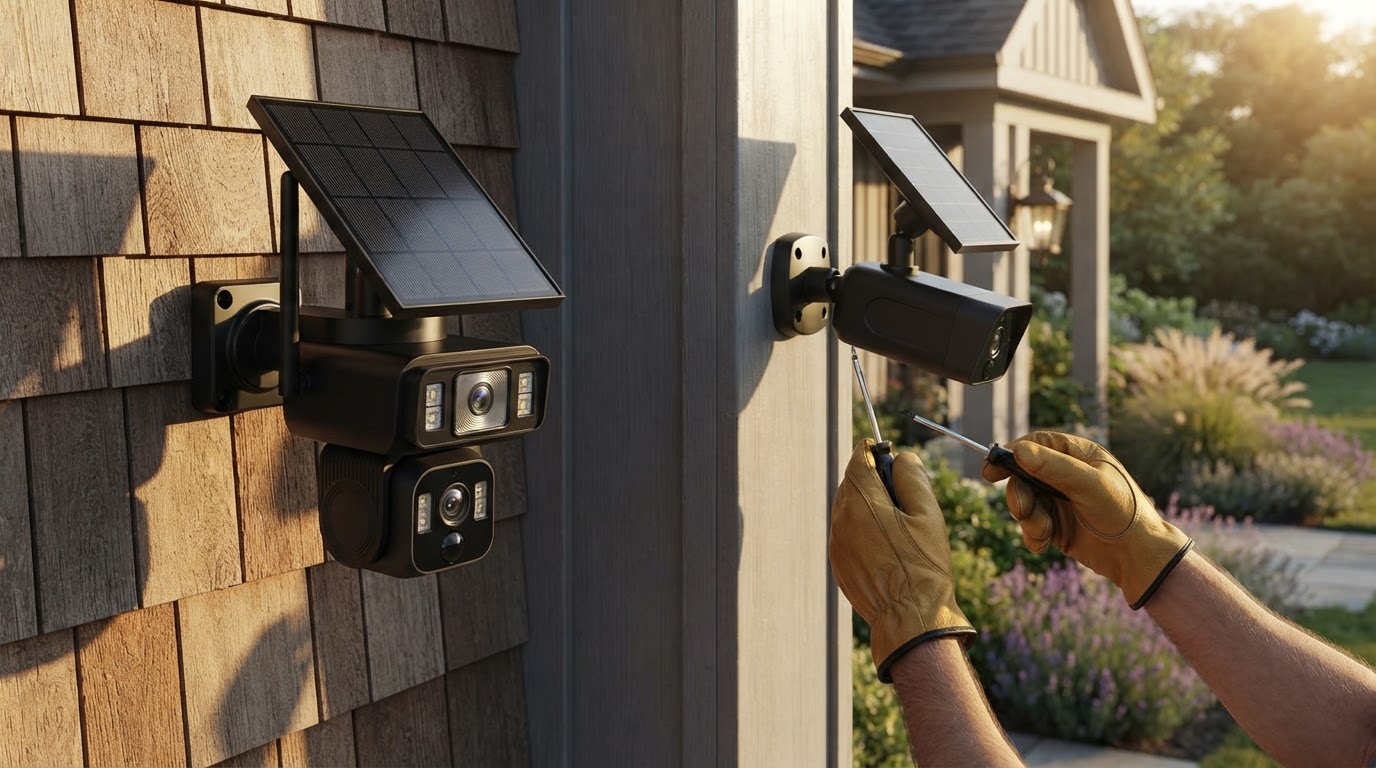
Three Critical Factors for Solar Surveillance Camera Setup
 Jordan HaleStaff Writer
October 19, 2026 — The shift toward energy-independent home security is accelerating as homeowners prioritize a Solar Surveillance Camera that operates without the constraints of a traditional electrical grid.
I remember standing on a rickety ladder last Tuesday, the sun warming my neck, as I positioned a small monocrystalline panel toward the southern sky. The first thing I noticed was how light these modern systems have become, shedding the bulk of older lead-acid batteries for streamlined lithium-ion cells. According to reports from SafeHome.org, the majority of manufacturers now integrate solar power by offering stand-alone panel accessories, which allows for much greater flexibility in where you actually place the lens versus where you catch the light. It turns out that this separation of the power source from the optic is the quiet revolution making off-grid monitoring truly viable for the average suburban backyard.
The Solar Surveillance Camera Deployment Framework
When I evaluate a solar powered security camera, I focus on the balance between energy intake and the hardware's consumption. A high-resolution 2K sensor, like those found in the Night Owl wire-free systems, offers stunningly detailed monitoring but requires a consistent trickle charge to maintain its spotlight and two-way audio functions. I keep coming back to the idea that placement is everything; a camera mounted under a deep eave might stay dry, but without a remote solar lead, it will go dark within days. During my testing, I found that even partial shading from a nearby oak tree reduced charging efficiency by nearly forty percent by mid-afternoon. This is why many users are looking toward a wireless outdoor camera solar configuration that allows the panel to sit six to ten feet away from the unit itself. It is also important to consider the operating environment. SafeHome.org notes that while the Google Nest Cam solar setup is robust, it cannot charge the batteries in temperatures that drop below freezing, a critical detail for those in northern climates. For those needing comprehensive coverage, exploring the best solar powered outdoor cameras reveals that the industry is moving toward higher IP ratings to combat this environmental stress. Somewhere around week two of my latest installation, I realized that the integration of motion-activated lighting, or a solar floodlight camera combo, provides the best deterrent, provided the battery capacity can handle the sudden lumen spikes at night. Ensuring your system is part of a broader strategy for optimizing safety with solar surveillance camera floodlights ensures you aren't just recording an event, but actively preventing one.
Expert tip: Always check the milliamp-hour (mAh) rating of the internal battery before mounting; a larger buffer is essential for maintaining 24/7 protection during consecutive overcast days when solar gain is minimal.
Choosing the right equipment means looking past the marketing and focusing on how the hardware handles the reality of the elements.
Shop Solar Surveillance Camera.
Sources
- Solar Powered Wire Free 2K Camera with Spotlight and 2-Way Audio - White
- Best Solar-Powered Security Cameras of 2026 - SafeHome.org
- Solar Security Cameras | Wire-Free Outdoor Protection - Tapo Store